- All
- Product Name
- Product Keyword
- Product Model
- Product Summary
- Product Description
- Multi Field Search


Views: 4 Author: Site Editor Publish Time: 2026-01-14 Origin: Site


In cassava ethanol production, the filter press is a core piece of machine for efficient solid-liquid separation. It not only transforms high-organic-content spent grains into high-value by-products through its efficient dewatering capabilities, but also significantly improves the overall efficiency and environmental friendliness of the entire process by substantially reducing the suspended solids content in the wastewater. It is an invaluable tool for cassava ethanol production companies.
The task at this stage is to separate the starch granules from the fibers and proteins in the cassava, preparing for subsequent saccharification and fermentation. The filter press needs to be able to handle coarse particles and high-fiber materials, and withstand high filtration pressure.
The task at this stage is to separate the fermented mash (containing alcohol yeast cells, unutilized fibers, proteins, etc.) to obtain a clear liquid (for distillation) and wet spent grains (for producing dried protein feed DDGS). The filter press needs to be able to handle fine particles, high viscosity, and potentially acidic materials after fermentation.
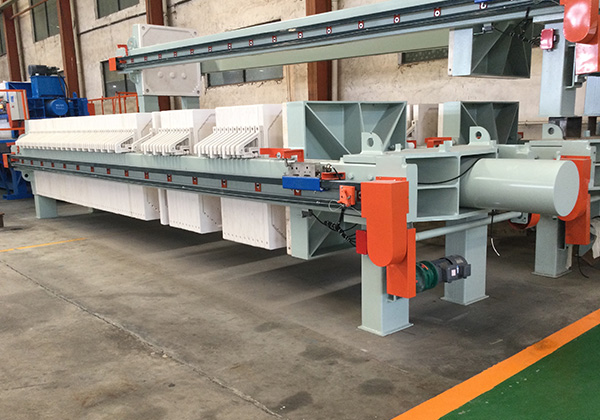
The automatic chamber filter press has a strong pressure capacity (up to 1.5 MPa), which can reduce the moisture content of the filter cake to a very low level, greatly improving the starch recovery rate. Its technology is relatively mature, and it has the advantages of large processing capacity, robust structure, and simple operation and maintenance, making it suitable for large-scale production.
The automatic membrane filter press adds an elastic membrane to the plate and frame or chamber filter press. After the feeding and filtration are completed, high-pressure air or water is injected into the membrane plate, causing the membrane to expand and perform a secondary strong squeezing of the filter cake. Compared with other types of filter presses, the cassava spent grains processed by the automatic membrane filter press have a lower moisture content, which greatly reduces the steam energy consumption required for subsequent drying into feed (DDGS), bringing significant economic benefits to the enterprise. Modern alcohol plants have high production volumes, and automatic membrane filter presses support automatic plate pulling, automatic discharge, and automatic filter cloth cleaning. This not only significantly improves production efficiency but also reduces the manual cleaning effort required due to the stickiness of cassava mash.
Is it starch extraction or mash separation? What are the requirements for filter cake dryness (moisture content)?
Since alcohol mash may be acidic, parts in contact with the material (filter plates, filter cloth, pipelines) require corrosion-resistant materials (such as PP, stainless steel 316L, etc.).
For large-scale continuous production, automatic membrane filter presses are preferred; for intermittent or small to medium scale production, plate and frame or chamber filter presses are more flexible.
For modern cassava alcohol production lines, a robust and reliable automatic chamber filter press is a classic choice in the starch extraction stage; in the mash separation stage, to achieve optimal energy efficiency and economic benefits, an automatic membrane filter press is usually the preferred option. Want to learn more about practical application cases of filter press technology in cassava alcohol production? Or seeking specific equipment selection advice? Please contact Quanhong Filtration, and we will provide you with professional answers and in-depth technical support.