- All
- Product Name
- Product Keyword
- Product Model
- Product Summary
- Product Description
- Multi Field Search


Views: 7 Author: Site Editor Publish Time: 2026-03-27 Origin: Site


Red mud, a strongly alkaline solid waste, is generated during the production of alumina. Statistics show that for every ton of alumina produced, approximately 0.6 to 2.5 tons of red mud are generated. In China, the annual discharge of red mud reaches millions of tons. Large-scale stockpiling not only occupies land resources but also poses a serious threat to the surrounding environment. Therefore, how to efficiently treat red mud has become a key concern in the industry.
Traditional red mud treatment methods mostly rely on wet disposal, where the material is stored in tailings dams. However, this approach carries significant safety risks. In the event of a dam failure, it can trigger disasters similar to mudflows, posing severe threats to the surrounding ecosystem and public safety. As a result, promoting dry stacking of red mud has become an industry trend. Currently, dry stacking mainly depends on filter press to achieve solid–liquid separation. Through efficient dewatering by filter press, the moisture content of red mud is significantly reduced, forming a stackable dry material. This minimizes the risk of dam failure at the source and serves as a key technical solution for safe storage and controllable environmental risks.
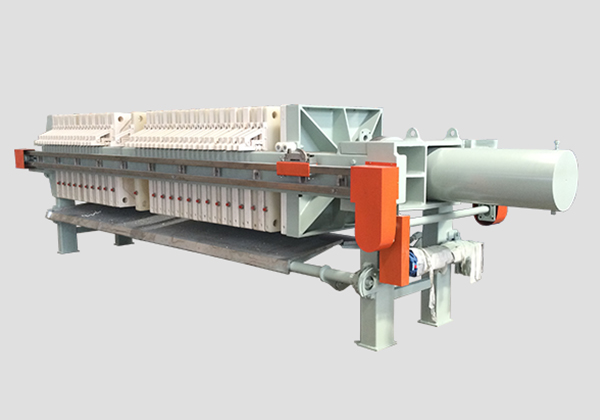
In practical applications, machine such as plate and frame filter press and automatic membrane filter press are widely used in red mud treatment. Among them, automatic membrane filter press, with their higher dewatering efficiency, can produce drier filter cakes that are easier to transport and store, making them the preferred choice for alumina producers. At the same time, the filtrate generated during the process can be recycled, helping reduce water consumption and enabling efficient resource utilization.
Beyond dewatering and storage, filter press also play a crucial role in the resource utilization of red mud. By mixing red mud with materials such as feldspar tailings and adding dilute hydrochloric acid along with fluxing agents, effective stratification can be achieved. After processing with a filter press, dry filter cakes and clean filtrate are obtained. With further treatment, valuable metals such as iron, titanium, and vanadium can be extracted from the filter cake, and even high-quality quartz sand can be produced, enabling high-value utilization of waste. This process not only improves resource efficiency but also avoids secondary pollution, aligning with the principles of a green circular economy.
For enterprises, selecting filter press machine with stable performance and strong processing capacity is critical. High quality filter press feature a high level of automation, stable operation, and low maintenance costs, meeting the demands of large-scale red mud treatment. They are essential machine for alumina producers to achieve environmental compliance, reduce costs, and improve efficiency. Driven by the dual needs of dry stacking and comprehensive utilization of red mud, filter presses are evolving from single solid–liquid separation devices into core machine that connects safe disposal with resource recovery.
The application of filter press in the treatment of red mud from alumina tailings is not only a core technical means to achieve dry stacking but also a key guarantee for promoting resource utilization. Expanding the in-depth application of filter presses in dry stacking and comprehensive tailings utilization is of great significance for improving environmental performance in the aluminum industry, reducing safety risks, and achieving efficient resource recovery. Contact Quanhong Filtration to customize an efficient red mud treatment solution tailored to your operating conditions.